What is modular construction?
Modular construction means building with standardised, prefabricated modules that are assembled and connected on site. The aim of modular construction is to shorten build times, lower costs and improve quality control. That makes modular construction a good alternative to traditional building methods.
What modular construction means
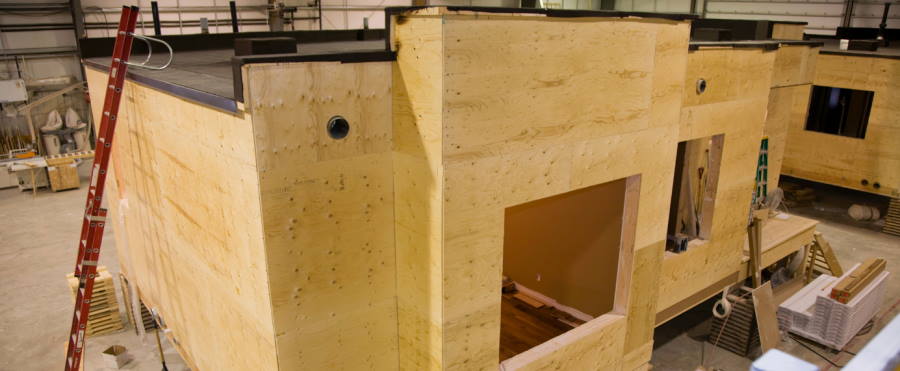
The term “modular construction” refers to a building method where the components and modules of a structure are built in a factory and then transported to and assembled on the construction site.
History of modular construction in the Netherlands
After the Second World War, more and more prefab elements were used in construction, which is seen as the start of modular building in the Netherlands. The company Portakabin was the first company in the Netherlands to start modular building, in the 1980s. It began with container modules for temporary accommodation. Thanks to technological developments, we can now make all kinds of elements and modules.
How it differs from traditional building methods
The big difference is that with traditional building methods almost everything is made on site. With modular construction almost everything is made in the workshop or factory. People sometimes say the quality of traditional building methods is better. That idea comes from the fact that modular construction was first used to quickly build temporary accommodation. That's outdated. The quality of modular construction has come on in leaps and bounds, and it now has more advantages than traditional building methods.
The advantages of modular construction
Speed
With so many homes needing to be built in the coming years, this is a big advantage. Modular construction is 30% to 50% faster than traditional building methods. This is partly down to standardised processes and being less dependent on available staff or the weather on site.
Lower costs
Thanks to standardised processes and better quality control, there are fewer costly mistakes. Less material is wasted and far less transport is needed.
Less disruption
Up to 90% fewer vehicle movements and a shorter build time mean less disruption for the neighbourhood.
Better for the environment and sustainable
Less transport also means less pollution. On top of that, up to 90% less waste is produced during construction and less energy is needed during the building process. Modules can be reused and even recycled, making this the solution for sustainable building.
Flexibility
A modular building can easily be modified, made smaller or made bigger by adjusting the modules. That way you can adapt a building when needs change.
The disadvantages of modular construction
There are few disadvantages to modular construction, which is why this building method is used more and more. It still suffers from the image that these kinds of homes aren't good quality, and that affects a building's resale value. That image is undeserved and is steadily changing for the better.
How does modular construction work?
It starts with a design by an architect or engineer, after which the various elements for the module are made in the factory. The same materials are used as in traditional building methods, such as concrete, steel and timber. Everything is tested before these elements are transported to the site. Thanks to the standardised process, the chance of errors is minimal, and robotics is often part of it. When everything is ready, the elements are transported to the site in the right order and at the right time, so everything can be assembled properly and quickly. This creates the modules that are joined together into one building.
How much does modular construction cost?
The cost of modular construction varies depending on a number of factors, such as the design and the materials used. Modular construction is 10% to 20% cheaper than traditional building methods. Modular housing units cost around €60,000 for 40m2.
Working in modular construction
There's plenty of work for carpenters in modular construction, where you'll be in the workshop assembling and making elements. There's also work outdoors, such as assembling and finishing the modules on site. You work a lot with top-quality power tools so you can work well and fast. Usually everyone has their own task and responsibility in the process, and together you turn the modules into one whole.
touch
Got a question? Get in touch with us. We're happy to help!